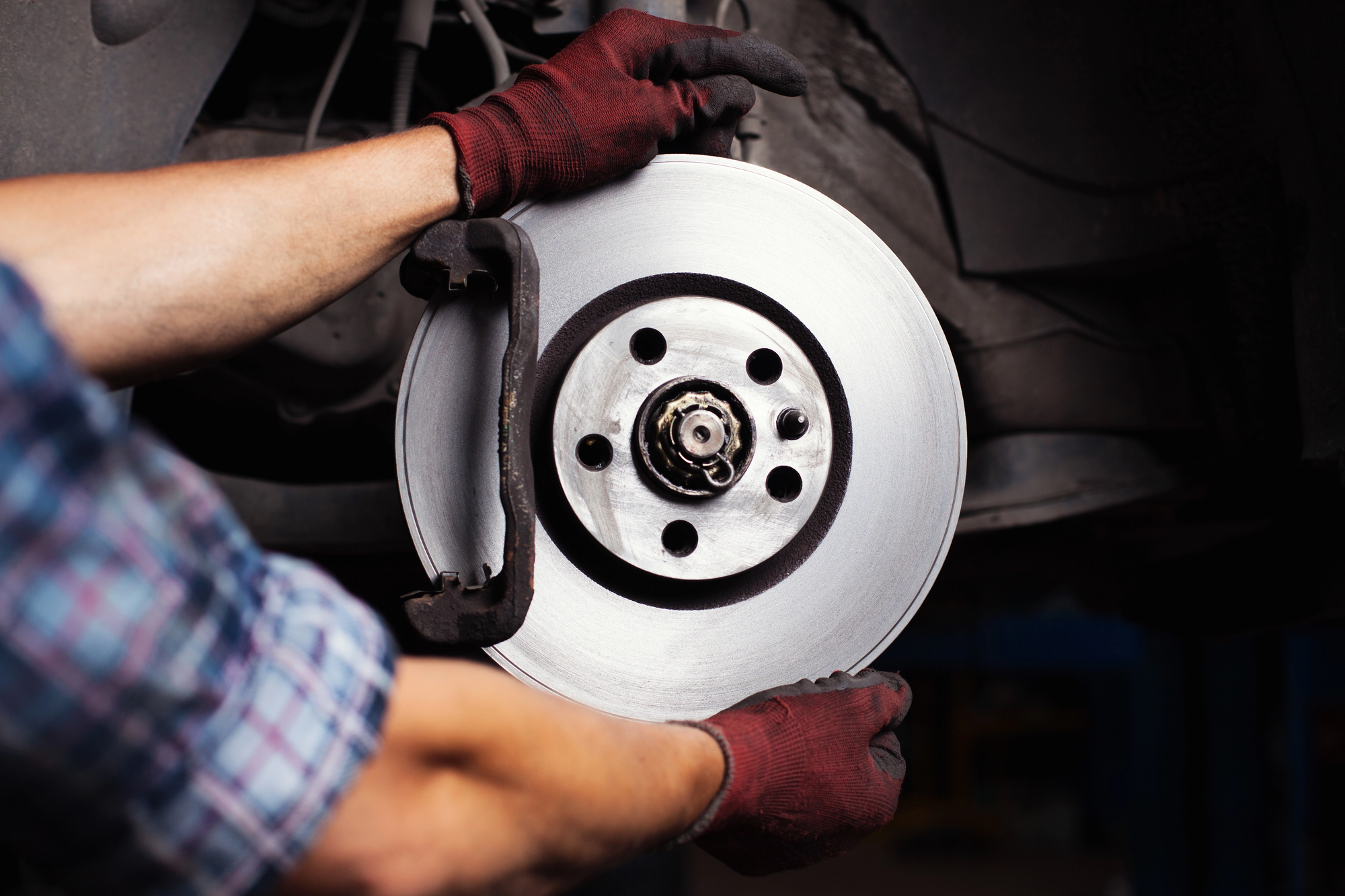
You don't need to be the person performing a brake repair to recognize when something deserves a closer look.
Brake drums and rotors are both critical components of commercial vehicle braking systems, but they work with different brake designs and can show different signs of wear or damage.
For truck drivers, understanding the basics can make pre-trip and post-trip inspections more meaningful and help identify concerns before they become bigger problems or render your truck out-of-service.
So, what's the difference between brake drums and rotors, and what should drivers be looking for?
The easiest distinction is that brake drums are associated with drum brake systems, while rotors are used with disc brake systems.
Both ultimately serve the same purpose: helping create the friction needed to slow and stop the vehicle. But the components that create that friction work differently. With drum brakes, brake shoes press against the inside surface of the drum. With disc brakes, brake pads and a caliper act on the rotor.
FMCSA identifies drums and rotors, along with components such as brake linings and pads, as parts of a commercial vehicle's overall braking system. These components must be properly constructed, installed, and maintained so the vehicle can stop safely.
For drivers, you don't necessarily need to know every mechanical detail. You do need to recognize that damage to either component can affect the safety and performance of the braking system.
Commercial trucks operate under demanding conditions. Heavy loads, long hours on the road, frequent braking, traffic, grades, and other operating conditions all put braking components to work.
Damage or excessive wear to drums and rotors can affect braking efficiency. Broken components can also create additional hazards if pieces become dislodged while the vehicle is moving.
That's why brake inspections shouldn't be limited to whether the truck seems to stop normally.
Drivers should regularly inspect visible brake components and report anything that appears damaged, excessively worn, or otherwise unusual.
A brake drum shouldn't be treated as a component you glance at simply to confirm it's still there.
During pre-trip and post-trip inspections, look at the visible portions of the drum for signs that something isn't right.
One of the most important concerns is cracking. Drivers should also pay attention to broken or missing pieces and other visible signs of damage or unusual wear. If something looks different from your previous inspection, don't assume it's harmless because the truck still appears to brake normally. A questionable component should be reported and properly evaluated.
Rotors deserve the same close visual inspection. Visible cracks, broken areas, significant rust, unusual grooves, or signs of metal-to-metal contact can indicate that the braking system needs attention.
Drivers don't need to diagnose the exact mechanical cause during a pre-trip inspection. The important part is recognizing that something doesn't look right and making sure it gets evaluated before the truck continues operating. Knowing what your brake components normally look like can make changes easier to spot.
Don’t rely on it…that's one of the reasons physical inspections matter.
A truck may appear to stop normally from the driver's seat while a brake component is beginning to deteriorate. Waiting until braking performance noticeably changes can allow a maintenance concern to become a much larger problem.
Your senses still matter, though. If you notice an unusual sound, vibration, pulling, change in braking response, or anything else that feels different, don't ignore it simply because the truck still stops. Combine what you experience behind the wheel with what you see during your inspections.
When you're thinking about brake condition, don't stop your inspection at the tractor.
The trailer's braking system matters too.
Drivers who regularly switch trailers shouldn't assume the next piece of equipment is in the same condition as the one they just dropped.
Inspect the entire combination before heading out. A problem with a trailer brake can be just as important as a problem on the tractor.
Brake problems aren't only maintenance concerns. They can become compliance problems too.
Brake-related violations are among the issues inspectors look for during commercial vehicle roadside inspections. Depending on the type and severity of the defect, a brake violation can potentially result in a vehicle being placed out of service until the required repairs are completed.
Now a maintenance problem has become an operational problem. The truck isn't moving. The load may be delayed. Repairs have to be coordinated, and the rest of the driver's schedule can be affected.
Finding a questionable brake component during a pre-trip inspection may be inconvenient.
Finding it during a roadside inspection with a loaded trailer behind you can be considerably more disruptive.
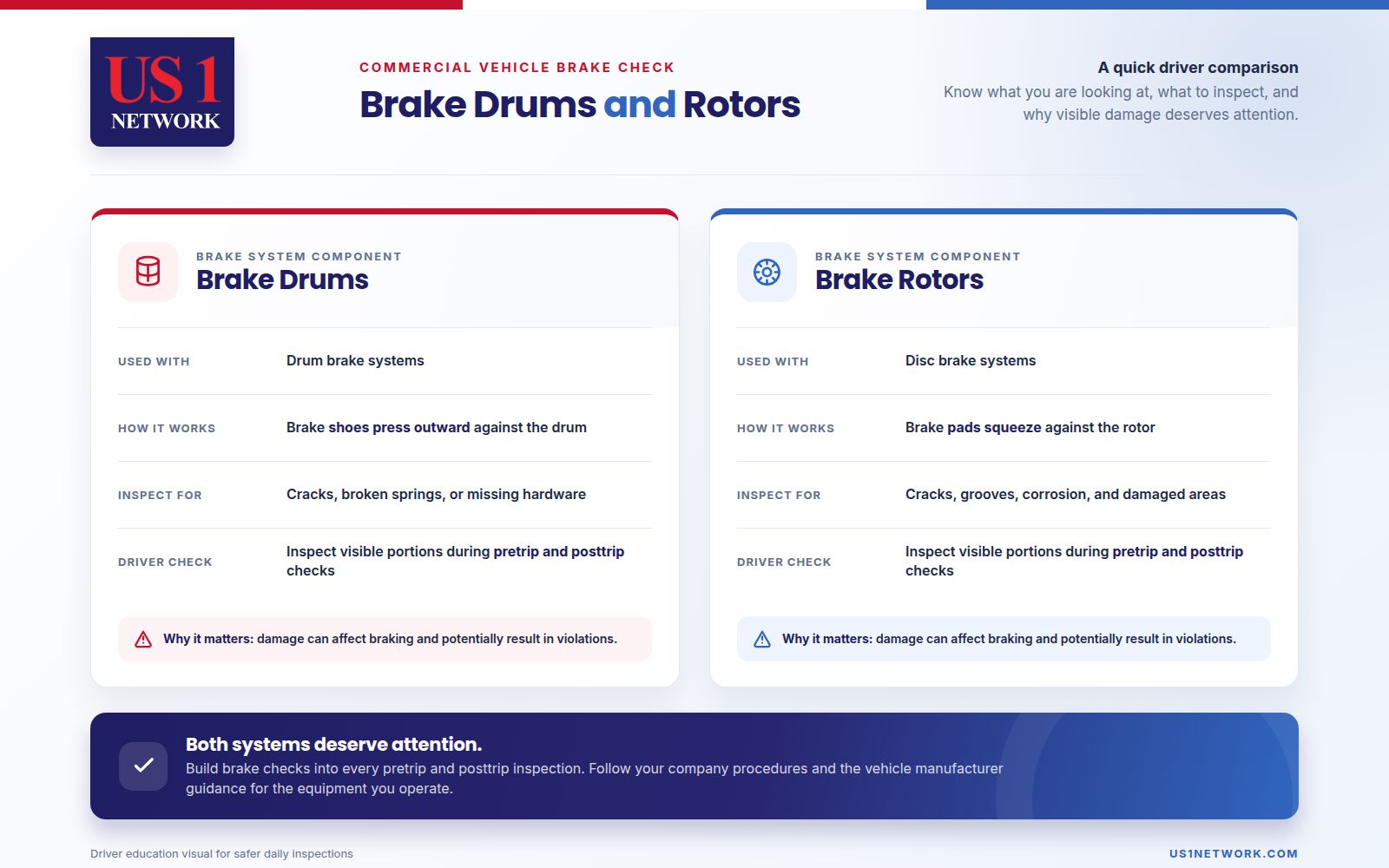
No. They're components used in different types of braking systems. Drums are used with drum brakes, while rotors are used with disc brakes.
Commercial trucks can use drum brakes, disc brakes, or a combination depending on the vehicle and its configuration. Drivers should be familiar with the equipment they're operating and the components they need to inspect.
Visible cracks, broken or missing pieces, or other unusual damage can indicate a problem that should be reported and evaluated.
Drivers should watch for visible cracks, broken areas, significant rust, unusual grooving, or other signs of abnormal wear or damage.
Serious brake defects can result in a commercial motor vehicle being placed out of service until the applicable problem is corrected. The outcome depends on the specific condition and applicable inspection criteria.
Brake components should receive attention as part of routine pre-trip and post-trip inspections, along with ongoing maintenance performed according to applicable requirements and the vehicle's maintenance program.
Brake drums and rotors may spend most of their time out of sight, but they shouldn't be out of mind.
Drivers don't need to become brake technicians. They do need to understand their equipment well enough to recognize when something looks or feels different.
Take the extra time during your inspection. Look at the visible components. Pay attention to changes in braking performance. Report cracks, damage, unusual wear, or anything else that doesn't look right.
A few extra minutes in the yard can help catch a brake problem before you're dealing with it on the road.

At US 1 Network, we're always looking for talented, motivated logistics agents to join our nationwide team. If you're a skilled, experienced agent with a self-starting mentality, apply today and find out how US 1 Network can advance your career. This is one of the fastest-growing industries in the country. What are you waiting for?
Learn More & applyIf you're looking for a career with solid benefits, excellent growth potential, and the freedom to work how and when you want, look no further. US 1 Network is looking for experienced owner operators to join our team of shipping experts. The logistics industry is growing rapidly, so apply today and join a winning team!
Learn More & apply


